


The Allure of the Unattended Process
It begins with a quiet observation: a data pipeline executing at 3:00 AM without a single human keystroke, a robotic arm in a laboratory completing a series of ligation assays with sterile precision, or a cloud server spinning up resources in response to a surge in web traffic. There is an almost hypnotic quality to watching a fully automated system operate. The fascination is not merely with the elimination of drudgery, though that is a significant part. It is a deeper, more profound attraction to the idea of a controlled, predictable environment. In a world marked by human error, variable attention spans, and emotional interference, an automated workflow offers a different kind of reality—one where outcomes are mathematically ordained. The deeper reason we are drawn to this is not laziness, but a search for a kind of perfection: the immutable logic of a system that executes its instructions flawlessly, ad infinitum. This is the promise that underlies the future of workflows, and it is a promise that is reshaping the very fabric of how organizations and individuals operate.
From Reactive Management to Proactive Orchestration

The traditional workflow is a reactive creature. A human sees an email, interprets a request, performs a task, and then waits for the next signal. This model is inherently bounded by the speed of human cognition and the narrow bandwidth of communication. The fully automated system, however, operates on a principle of proactive orchestration. Consider the example of an automated ETL (Extract, Transform, Load) workflow. Rather than a data analyst manually downloading a CSV file every Monday morning, the system monitors a data source. When new data arrives—a trigger event—the pipeline autonomously extracts it, applies validation and transformation rules (cleaning the data, joining it with other datasets), and then loads it into a data warehouse. The system does not wait; it anticipates. This shift from “do this when I tell you” to “do this when conditions are right” is a fundamental change in organizational logic. It allows businesses to be responsive at machine speed, turning data from a historical record into a live, actionable asset.
The Aesthetics of Process and Error Reduction

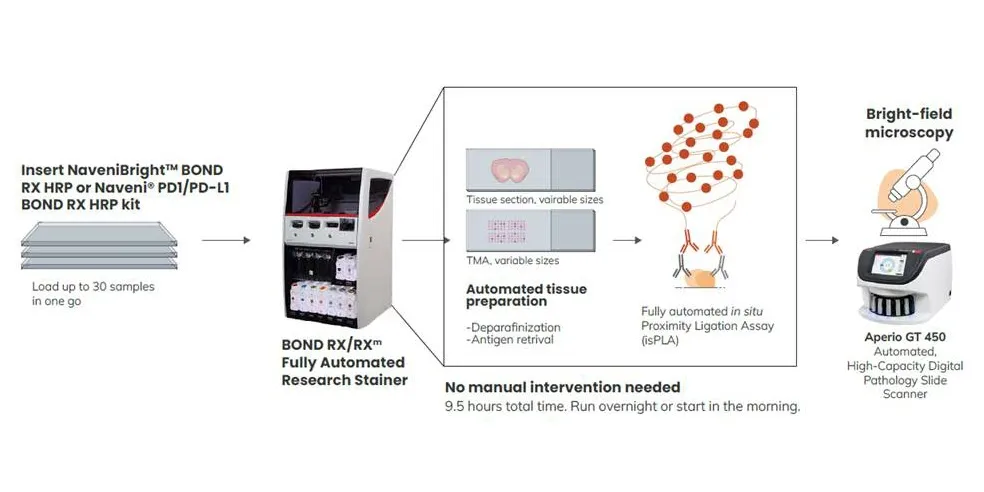
There is an undeniable aesthetic to a well-designed automated workflow. It is the beauty of clean logic, of removing friction. This is not merely a surface-level attraction. The aesthetic mirrors a deeper functional benefit: the systematic reduction of error. Every manual step in a process is a point of possible failure. A mistyped formula, a forgotten step, a miscommunication between departments—these human costs are measurable. Fully automated systems do not suffer from fatigue or distraction. They execute the same step with the same precision at iteration 1,000 as they did at step 1. In fields like clinical diagnostics, where accuracy is non-negotiable, this capability is revolutionary. Newly automated proximity ligation assays, for example, simplify complex molecular biology workflows by standardizing every pipetting step, incubation time, and readout. The result is not just faster results, but results that are statistically more reliable. The system becomes a trusted collaborator, not a mindless tool.
Intelligent Adaptation and the Human Role
A common misconception is that fully automated systems are rigid and brittle. In reality, the next wave of workflow automation is defined by its adaptability. These are not simple scripts that break when input changes slightly; they are systems that use rules, conditional logic, and even machine learning models to handle exceptions. A fully automated supply chain system, for instance, does not just reorder stock when inventory hits a threshold. It checks for seasonal demand patterns, supplier lead times, and even weather forecasts that might affect shipping. If a supplier is late, the system can automatically flag the issue, find a secondary vendor, and update the financial forecasting model—all without human intervention. This redefines the human role within the organization. The focus shifts from “doing the work” to “designing the work.” The new expertise lies in crafting these orchestration rules, tuning the sensitivity of triggers, and analyzing the strategic insights that emerge from a system that runs 24/7. The human becomes the architect of the machine’s intelligence.
The Foundations of Trust in a Self-Running World
Trust is the currency of automation. A system that runs on its own must be transparent. The future of these workflows rests on three pillars: observability, logging, and fail-safe mechanisms. Every action taken by the automated system must be recorded in an immutable audit trail. When a data pipeline fails, the system must not only alert a human but also provide enough contextual information—what the input was, which step failed, the error code—so that the human can understand and correct the process. This is where the “fully automated” label meets reality. Even the most advanced system needs oversight. However, that oversight is no longer micromanagement. It is strategic supervision. The platform becomes a reflection of the human expertise encoded within it, a reliable extension of the team that can scale effortlessly. This shift in trust enables organizations to take on projects of a size and complexity that would have been unthinkable with manual processes, unlocking new levels of efficiency and innovation.
The Inevitable Trajectory
The observation that started this exploration—the quiet attraction to the unattended process—is not a passing trend. It is a signal of a fundamental shift in how we conceive of work. We are moving from an era of human execution to an era of human design and machine execution. The fully automated workflow is not about replacing people; it is about amplifying their capacity to focus on the complex, creative, and strategic problems that machines cannot solve. As these systems become more sophisticated, they will become the invisible infrastructure behind every successful modern organization—the silent, reliable engine that turns intention into outcome. The future of workflows is not one of fear, but of fascination with the beauty of a well-oiled machine, running in perfect harmony with the human mind that built it.
Leave a comment