


The Overlooked Architecture of Efficiency
Efficiency is rarely about moving faster. The cult of speed has sold us a false promise—that productivity is a function of frantic motion, of cramming more tasks into shrinking slots of time. But step back from the treadmill, and a different truth emerges. Highly efficient people do not simply do more; they think differently. Their secret is not a better calendar app or a longer to-do list, but a set of cognitive habits that restructure the very terrain of decision-making. These mental frameworks are not innate gifts; they are architectures that can be built. And building them requires a fundamental shift in perspective: from managing time to managing attention.
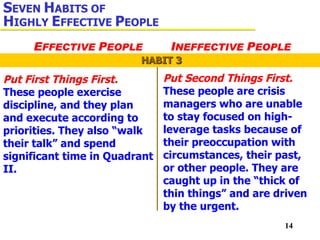
Consider the default state of the modern mind: a browser with seventy tabs open, a phone buzzing with notifications, a calendar bleeding into the next week. This is not efficiency; it is fragmentation. The cognitive habit of highly efficient individuals begins with a single, ruthless premise: the most valuable resource is not time, but mental bandwidth. They understand that every decision—no matter how small—consumes a piece of that bandwidth. So they wage a war against extraneous choice. They streamline their wardrobes, automate their finances, and batch similar tasks. This isn’t about asceticism; it’s about conservation. By reducing the volume of trivial decisions, they preserve their cognitive fuel for what truly matters. The question shifts from “How can I get more done?” to “What is the one thing that, if done well, will make everything else easier or irrelevant?”
The Pre-Mortem: A Mental Rehearsal for Failure
Most people plan for success. They imagine the triumphant finish line, the applause, the completed project. Highly efficient people, however, practice a darker, more effective cognitive ritual: the pre-mortem. Before launching a project, they pause and imagine it is one year in the future, and it has failed utterly. They then ask the uncomfortable question: “What went wrong?”
This mental exercise is a powerful antidote to optimism bias. It forces them to surface hidden assumptions, identify bottlenecks, and anticipate obstacles that a rosy forecast would ignore. Where a standard plan might assume “the client will approve this quickly,” the pre-mortem whispers, “What if the client goes silent for two weeks? What is our contingency?” This habit does not breed pessimism; it breeds preparedness. It flips the default perspective from reactive scrambling to proactive defense. The efficient person spends ten minutes imagining failure today to save ten hours of firefighting tomorrow. They know that the most expensive mistakes are the ones you never saw coming.
Constraint Framing: The Paradox of Limited Resources
There is a peculiar irony at the heart of productivity: abundance often breeds paralysis. Give a team unlimited time and unlimited budget, and they will often produce nothing. Give a team a tight deadline and a shoestring budget, and they are forced to innovate. Highly efficient people understand this paradox. They do not lament constraints; they leverage them. This is a cognitive habit called constraint framing.

Instead of asking “How can I have more?” they ask “What can I do with only what I have right now?” This reframing activates a different part of the brain—the part that solves puzzles rather than the part that kvetches about limitations. If you have only 30 minutes to write a report, you will write a concise, impactful report. If you have three hours, you will dither, rewrite the opening line seventeen times, and check social media. The efficient person artificially creates constraint. They set a timer. They limit their options. They embrace the friction of shortage because it generates the heat of focus. This is not about being cheap with resources; it is about being generous with resolve.
Strategic Ignorance: The Art of Knowing What to Forget
We are drowning in information, yet starving for wisdom. The most radical cognitive habit of highly efficient people is not their ability to learn, but their ability to strategically forget. They are ruthlessly selective about what they allow into their minds. They do not watch the news for entertainment. They do not read emails the moment they arrive. They do not feel obligated to have an opinion on every trending topic.
This is not laziness; it is a form of intellectual triage. They recognize that every piece of new information is a potential distraction, a parasite that can hijack their attention. They guard their mental environment with the ferocity of a librarian protecting a rare manuscript. They maintain a “stop doing” list alongside their “to do” list. They unsubcribe, mute, and decline. They have a high threshold for novelty. The question that governs their intake is not “Is this interesting?” but “Will this information help me make a better decision about something I care about deeply?” If the answer is no, they let it pass. In a world of infinite data, the ability to ignore is the ultimate strategic advantage.
The Feedback Loop of Rigorous Self-Questioning
Finally, the cognitive architecture of efficiency is not static; it requires constant maintenance. Highly efficient people are their own most demanding critics. They practice a habit of rigorous self-questioning at critical intervals. After completing a task, they do not simply move on to the next. They pause and ask, “What did I learn from this? What could I have skipped? Did I use the right tool? Was my approach elegant or merely fast?”
This reflective loop prevents them from being what philosopher Nassim Taleb calls a “fragile” person—someone who is harmed by randomness and error. Instead, they become antifragile. Every mistake becomes a data point. Every inefficiency becomes a clue. They calibrate their mental models through tiny, iterative experiments. “Yesterday, I tried batching my emails at 10 AM and 3 PM. It felt like I lost a connection to my team. I need to adjust.” This is not self-flagellation; it is a scientist’s attitude applied to one’s own life. The ultimate shift in perspective here is viewing your own mind not as a fixed instrument, but as a system you can endlessly optimize.
In the end, the habits of highly efficient people are less about speed and more about velocity—speed with direction. They trade the frantic energy of the reactivist for the calm, deliberate power of the architect. They understand that true efficiency is not a measure of how much you do, but of how much you achieve with the finite, beautiful, and irreplaceable resource of your attention. The promise is not that you will do more in less time—it is that you will do the right things, once, and do them well.
Leave a comment