


The Clogged Arteries of Collaboration
Imagine a team not as a group of individuals, but as a single, finely-tuned organism. Each person is a vital organ, contributing a unique rhythm. The brainstorms are the heartbeat, the deadlines are the breath, and the daily stand-ups are the neural firings that keep the body moving. But what happens when the central nervous system—communication—begins to misfire? The body doesn’t collapse all at once. It slows. It fumbles. It develops a dangerous, creeping lethargy.
In the modern team, public speaking is not just a stage performance; it is the bloodstream. It carries ideas from the strategic cortex to the execution limbs. When speaking habits go bad, they become cholesterol in this bloodstream—thick, sticky, and obstructive. These are not the dramatic failures of a keynote gone wrong. They are the subtle, systemic mistakes that turn a sprint into a wade through mud. The team doesn’t fail; it just… drags.

The Fog of Excess Detail
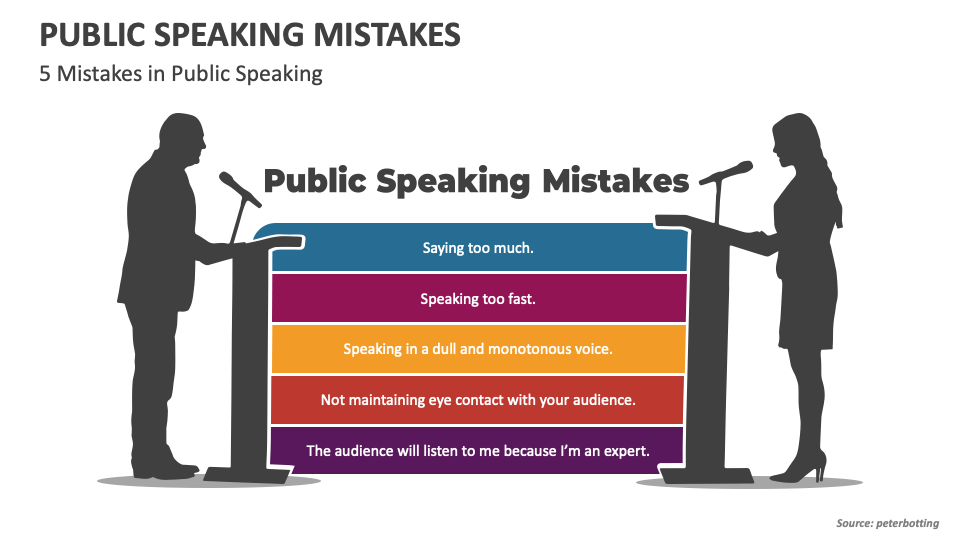
The most pervasive mistake is not silence; it is the tsunami of unnecessary context. A leader asks for a project update, and a team member launches into the full epic narrative: the journey of the data, the struggle with the spreadsheet, the three alternate pathways that were considered and dismissed. By the time the speaker reaches the actual conclusion—”We are on track”—the listener’s cognitive fuel tank is empty.
This is the Fog of Excess Detail. It feels productive because the speaker is saying *so much*. But in a team setting, verbosity is a tax. Every extra sentence is a minute of attention stolen from the next agenda item. The irony is profound: the more a team member talks to prove they are thorough, the less the team absorbs. The organism slows because its neurons are firing random, non-essential signals. The cure is brutal brevity. Treat every update like a telegram where every word costs a dollar. What is the one thing the team *must* know? Start there. End there.
The Sin of the Unfinished Sentence
Then there is the speaker who does not trust their own point. They begin a thought, see a quizzical eyebrow, and immediately pivot. “I think we could, maybe, look at the data—but wait, actually, that might conflict with what Jen said, so perhaps…” This is the Unfinished Sentence Syndrome. It is the auditory equivalent of a wobbly cart wheel.
In a fast-moving team, decisiveness is oxygen. A speaker who constantly hedges, retreats, or apologizes for their idea creates a vacuum. The team waits. The decision tree freezes. Momentum, that fragile and precious resource, leaks away. The unique appeal of a strong speaking style here is commitment. You do not need to be right; you need to be clear. State the premise. Defend it. If it is wrong, the team will correct it—but they can only correct something that was actually said. A half-spoken idea is a ghost; it haunts the meeting but never gets buried or celebrated.
The Glazed Eye of the Monologue
A team is a conversation, not a lecture. Yet the most insidious mistake is the solo performance. A manager or lead uses the team meeting as a stage to demonstrate their own intelligence, wisdom, or effort. They drone through a 20-minute monologue about a strategic vision while wearing a look of intense focus.
They do not notice the rapid, silent clock-watching. They miss the subtle shift in posture as the team leans back, not forward. This is the Monologue Mirage. It feels like leadership, but it is actually isolation. The speaker mistakes airtime for influence. The unique appeal of a healthy team talk is the opposite: the interruption. The best speakers in a collaborative environment actively invite disruption. They pepper their speech with questions. They pause—uncomfortably long—to let someone else jump in. They know that a team moving fast does not need a narrator; it needs a catalyst. If you are the only one talking, you are not leading the team; you are blocking it.
The Quiet Killer of Jargon
Every team, over time, builds a fortress of internal language. Acronyms, inside jokes, technical shorthand. It is efficient inside the walls, but it becomes a trap. When a team member speaks, they assume the listener shares their exact context. “We need to pivot the KPI alignment for the Q3 SOP rollout.”
This is Jargon Insulation. It sounds smart. It makes the speaker feel like an insider. But it is a high-speed way to disengage a third of the room. The new hire checks out. The cross-functional partner feels alienated. The team slows down because they have to spend mental energy decoding the message instead of acting on it. The genius move is to speak as if you are explaining the idea to an intelligent person from a completely different industry. You lose no authority. You gain universal clarity. Clarity is the lubricant for a fast team. Jargon is the sand.
The Ripple Effect of the Unprepared Speaker
Finally, there is the sin of winging it. A team member walks into the meeting without a clear mental map of what they need to say. They rely on the energy of the moment. They look at the screen. They ramble. They search for the right word while the room waits.
This is not a personality flaw; it is a signal. It says, “My time is more valuable than yours.” The unprepared speaker costs the team compounding interest. Ten people waiting for 30 seconds costs five minutes of collective life. Over a quarter, this becomes hours. The unique appeal of a prepared speaker is respect. They walk in with a thesis. They know the three bullet points. They sit down before the team is tired. It is a subtle superpower. In a world of noise, the quiet confidence of someone who knows exactly what they need to say—and says it—is the fastest engine a team can have.
The team is a system. Fix the speech, and you unclog the arteries. The organism remembers how to run.
Leave a comment