


The Mastery Framework for Lifelong Productivity
There is a peculiar fascination we hold for the prolific. We watch the novelist who publishes a book every eighteen months, the entrepreneur who launches a company while running three others, or the artist who produces a breathtaking portfolio with seemingly effortless consistency. We tell ourselves they possess a secret—a hidden gene for discipline, or an inhuman capacity for focus. But the truth is less mystical and more structural. What separates the perpetually productive from the rest is not grit alone; it is a cognitive architecture. They have built, often unwittingly, a Mastery Framework.
This framework does not hinge on managing clock time. It hinges on managing energy, attention, and the compounding nature of deliberate improvement. The reason our fascination runs so deep is that we sense, intuitively, that productivity should not feel like a war of attrition against our own willpower. The Masters have not won that war; they have simply changed the battlefield.
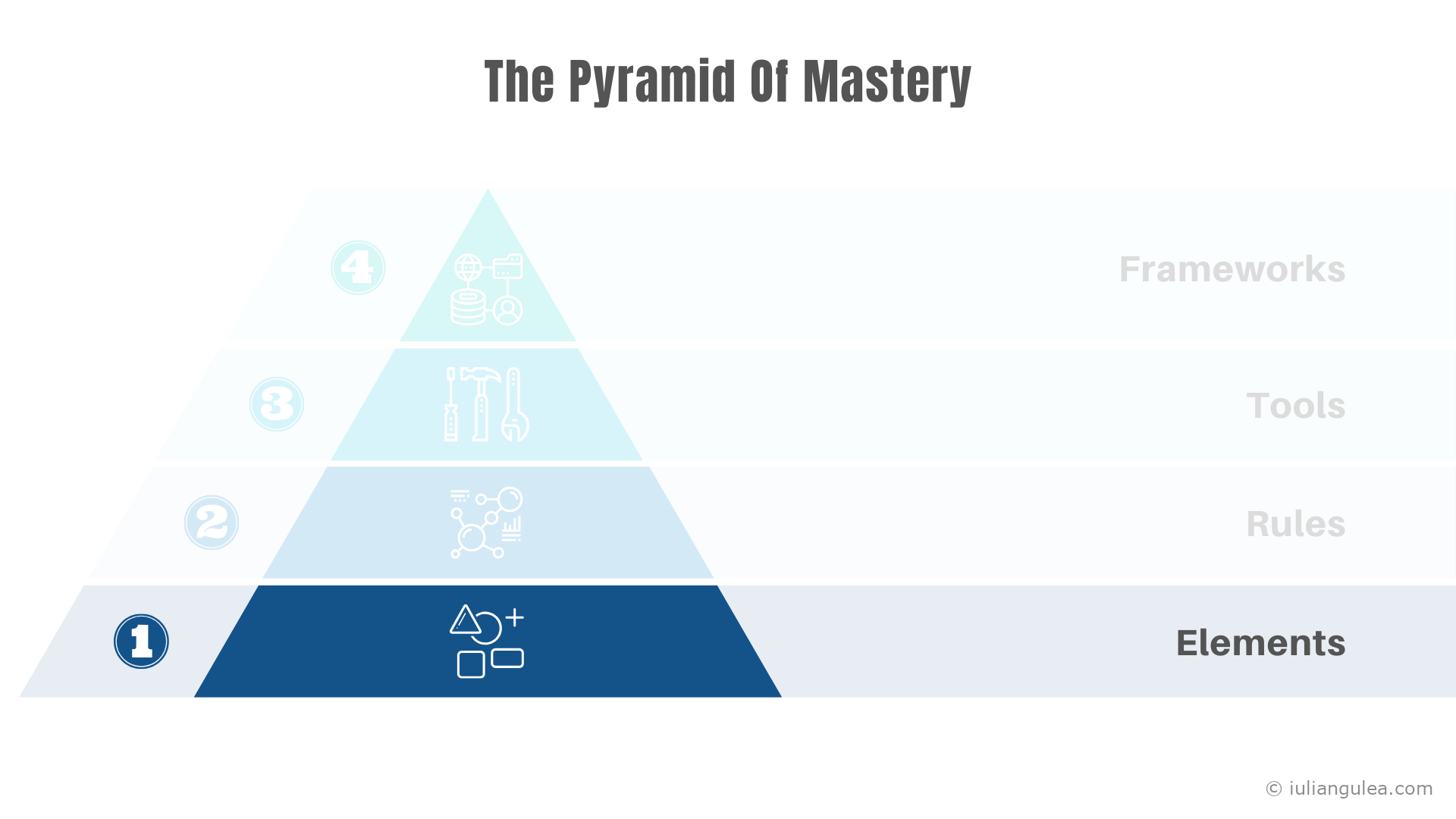
The Foundation: Unconscious Competence and the Elimination of Choice
The first, and most overlooked, aspect of the Mastery Framework is the deliberate cultivation of unconscious competence. Most people waste vast cognitive resources on tiny decisions: what to wear, when to check email, where to place their notebook. Each trivial choice is a micro-tax on willpower. The Master, by contrast, builds systems so deeply ingrained that they operate on autopilot. They do not decide to work at eight in the morning; they simply wake up and start, because their environment has been engineered to make the starting frictionless.
This is not laziness. It is extreme efficiency. By moving repeated actions into the realm of muscle memory and habit, the conscious mind is freed for the work that truly demands it: judgment, creation, and adaptation. This is the shift from “doing things right” to “doing the right things without thinking.” The framework demands that you ruthlessly audit your daily routines, identifying every moment where you currently stop to deliberate, and eliminating that gap with a pre-loaded decision.
Consider the craftsman who sharpens his chisels every evening without fail. He does not ask himself if he feels like sharpening them. The ritual is sacred, automatic, and non-negotiable. This is the foundation of lifelong productivity: a bedrock of habits so solid that they resist the erosion of mood, fatigue, or distraction.
The Middle Layers: The Spiral of Deliberate Practice
Once the foundation of automatic habits is laid, the framework encounters its most dynamic phase: the spiral of deliberate practice. This is where the common observation fails. People assume that mastery is a linear journey—that each hour of work yields equal returns. The Master knows that productivity is a compounding curve with painful plateaus.
Deliberate practice is not the same as repetition. It is the painful act of operating at the edge of your competence, identifying a specific weakness, and attacking it with focused intensity. This requires a feedback loop—a mirror. The Writer must edit her draft until the prose is lucid. The Programmer must refactor his code until it is elegant. The Chef must taste and adjust until the flavors balance.
Within the Mastery Framework, productivity is not measured by volume of output, but by the signal-to-noise ratio of improvement. The Master welcomes the moments of struggle, because they signal that she is not merely coasting. She is layering new capabilities onto her foundation. This process is why a ten-year professional can often be outmatched by a five-year master who has practiced deliberately. The framework makes time irrelevant; what matters is the density of intentional effort within that time.

The Apex: Context-Shifting and the Harvest of Paradox
The highest tier of the Mastery Framework is paradoxical. At this stage, productivity becomes invisible. The Master is no longer “being productive” in the way a student might cram for an exam. Instead, she operates in a state of dynamic equilibrium. She understands that prolonged focus must be punctuated by deliberate context-shifting—by doing the opposite of work.
This is not a luxury; it is a cognitive necessity. The brain, like a muscle, fatigues under sustained tension. The Master does not push through fatigue. She pivots. A morning of intense analytical writing is followed by an afternoon of manual labor, a walk in nature, or a conversation with a child. These seemingly unproductive intervals are when the subconscious integrates, re-frames, and solves complex problems. They are the fallow fields that enrich the next harvest.
The Master also understands a deeper truth: that productivity without purpose is busyness. The framework is not a productivity hack; it is a lens for life. Every action, from washing a dish to writing a novel, is seen as a repetition towards mastery of being human. This reframing dissolves the anxiety of wasted time, replacing it with a soft, persistent curiosity. The Master is no longer chasing efficiency. She is dancing with time.
To adopt the Mastery Framework is to accept a radical shift in identity. You stop asking “How can I do more?” and start asking “What can I become?” The output becomes a byproduct of the person you are building. Lifelong productivity, then, is not a schedule to keep. It is a person to grow into—a person whose habits are invisible, whose practice is relentless, and whose rest is sacred. And that, finally, is the secret hidden in plain sight.
Leave a comment