


The Ultimate Guide to Life Optimization
We have all felt it—that subtle, persistent friction in the gears of an otherwise good day. A missed deadline because the car battery died. An hour of productivity lost to a cluttered desktop. A conversation derailed by a poorly timed notification. These aren’t catastrophes; they are micro-failures. Yet, we gaze at the polished lives of others—the early risers, the planners, the ones who seem to move through life with the liquid grace of a well-crafted system—and we wonder: What do they know that I don’t? The fascination isn’t with perfection; it is with flow. Life optimization is not about squeezing every second of joy out of life; it is about removing the grit that slows you down, aligning your environment, your time, and your energy so that life feels less like a struggle and more like a meaningful pursuit. This guide is your operating manual for that alignment.
The Foundation: Environmental Design
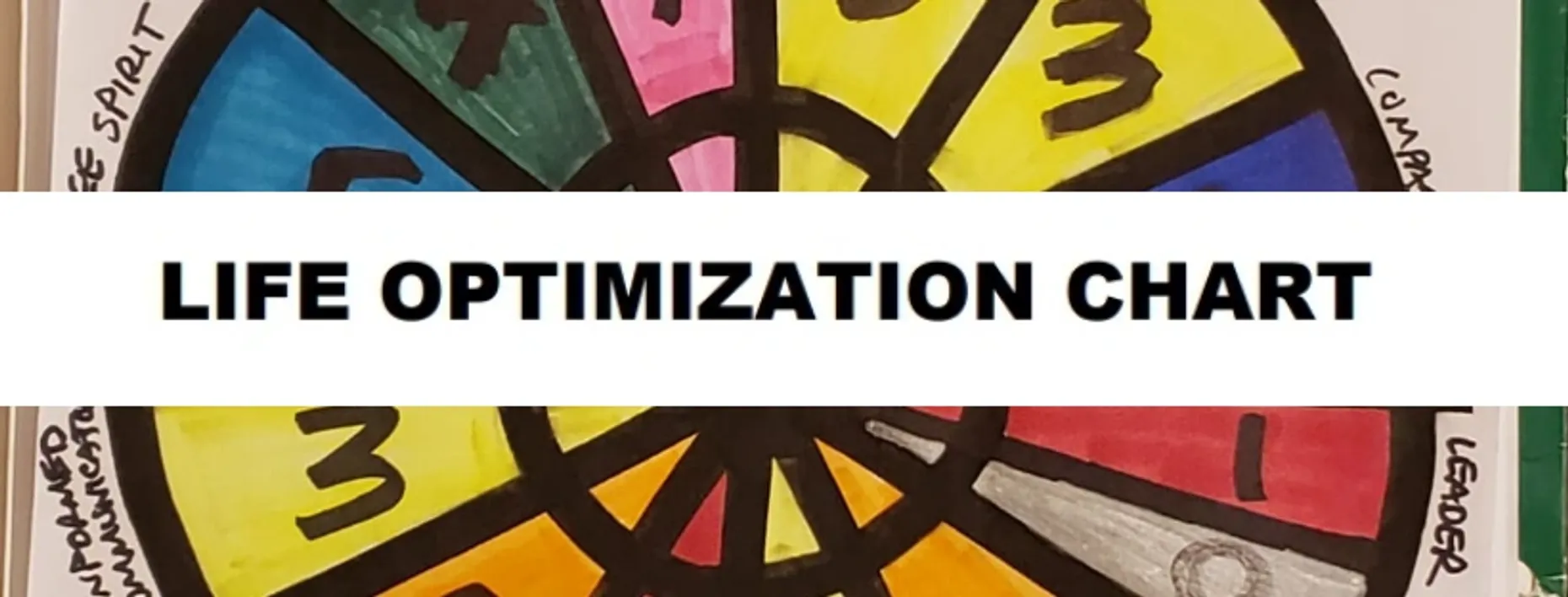
The first principle of optimization is often the most overlooked: you cannot outperform a bad environment. Your surroundings—physical and digital—are either a launching pad or a swamp. Look at the image above: a circle of life domains all interconnected. The environment is the soil. If your desk is cluttered with yesterday’s coffee cups and uncategorized papers, your brain subconsciously processes that chaos as unfinished business. Studies in cognitive psychology confirm that visual noise directly reduces working memory capacity. The fix is brutally simple: design for friction reduction. Place your phone in another room during deep work. Set up a dedicated charging station with clear cables. Keep only the tools for the next task on your workspace. This isn’t minimalism for aesthetic sake; it’s strategic disarming of distractions.
Time as Architecture, Not Currency
We often treat time as a finite resource to be spent, traded, or saved. This transactional view is why so many “time management” systems fail. Instead, think of time as architecture—a structure whose walls you build daily. A typical workday collapses under the weight of context-switching: jumping from email to a meeting to a spreadsheet, each shift costing up to 23 minutes to regain focus. The optimized approach is block-building. Dedicate Monday mornings to strategic planning, Tuesday afternoons to creative output, and Wednesday evenings to maintenance tasks (errands, bills, planning). By rigidly zoning your time, you protect deep work from the tyranny of the urgent. The art lies in knowing that saying “yes” to a low-priority request is saying “no” to your most important work.
Energy Management Over Hour Counting
A great irony of modern optimization is that we try to cram more into fewer hours, yet performance is not linear with time. It is exponential with energy. If you are sleep-deprived and nutritionally depleted, an 80-hour work week will produce less than a focused 30-hour one. This is where the life optimization circle truly reveals its genius: it forces you to consider the health domain as non-negotiable infrastructure. The most effective executives do not wake up at 4:00 AM to do more; they wake up early to do less, but better. They prioritize a 20-minute workout, a high-protein breakfast, and deliberate exposure to sunlight before touching a single email. Your body is the engine; you cannot optimize the system if your fuel is low-grade and your pistons are clogged.

The Cognitive Stack: Managing Mental Inputs
We are drowning in information. Every notification, every headline, every Slack ping is a tiny demand on your attention bandwidth. Optimizing your cognitive stack means curating your inputs with the same ruthlessness you apply to your budget. This involves three deliberate filters: 1) The Source Filter—unsubscribe from any newsletter that hasn’t provided actionable value in the last month. 2) The Time Filter—consume news only once per day, not throughout it. 3) The Utility Filter—ask, before opening any article or video, “Will this improve my life or just entertain me for a moment?” The goal is not ignorance; it is signal over noise. Your brain has a finite processing capacity per day. Guard it like a vault.
The Feedback Loop: Measurement Without Obsession
Optimization without measurement is guesswork. But measurement without meaning is a treadmill. The critical distinction is between lagging indicators (results from the past) and leading indicators (actions that predict future results). A student or professional optimizing for college life, as illustrated in the third image, should track not just the final grade (lagging), but the hours of undistracted study per day (leading). Similarly, track your sleep consistency, your weekly number of deep-work sessions, and your mood via a simple 1-10 scale each evening. The data is feedback, not judgment. If your numbers drop, don’t punish yourself; adjust the system. This is where optimization becomes a game, not a chore.

The Art of the Recurring Audit
An optimized system is a living system. What works when you are 25 may fail by 30. The final, non-negotiable component is a recurring audit. Every Sunday evening, spend exactly 15 minutes reviewing your week with three questions: What worked? What drained me? What can I eliminate? This is not a journaling exercise; it is a mechanical check-up. You are looking for patterns—like how your poor sleep on Thursday always leads to a catastrophic Friday. Adjust accordingly. Over time, this habit builds a subtle but powerful change: you move from reacting to life to designing it. The ultimate goal of life optimization is not to be busy, but to be free. Free to pursue what matters, knowing that the machinery of your days is running clean, quiet, and strong.
Leave a comment