


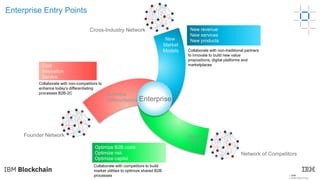
In the ever-evolving landscape of global talent acquisition, IBM has quietly orchestrated a revolution—not with a splashy marketing campaign, but with a quiet, relentless force: blockchain-powered digital badges. These aren’t mere digital stickers on a résumé. They are verifiable, immutable credentials that redefine how skills are recognized, shared, and trusted across continents. Imagine a world where your expertise isn’t just claimed—it’s proven, portable, and perpetually accessible. That world is not a distant utopia; it’s the reality IBM is building today. Welcome to the future of talent validation, where every badge tells a story of mastery, and every story unlocks opportunity.
Ajarn Forum Latest Articles
Blockchain for Art Provenance (NFTs vs. Badges)
In the labyrinthine corridors of the art world, provenance—the documented history of an artwork—has long been the silent guardian of authenticity and value. Yet, in an era where digital art proliferates like wildfire and forgeries lurk in the shadows, traditional provenance systems often buckle under the weight of inefficiency and opacity. Enter blockchain technology, a revolutionary ledger that promises to redefine how we track, verify, and celebrate the lineage of art. But blockchain isn’t a monolith; it manifests in two distinct forms for art provenance: NFTs and digital badges. Each offers a unique pathway to transparency, but their applications diverge as sharply as the strokes of a master’s brush. Whether you’re a collector, artist, curator, or simply an art enthusiast, understanding the nuances between these blockchain-based solutions could be the difference between owning a masterpiece and a masterful forgery.
Case Study: University Reduces Dropouts by 25% Using Sentiment AI
The university’s hallways once echoed with the hollow rhythm of empty chairs—each vacant seat a silent testament to the students who had slipped through the cracks. But today, those same corridors hum with the vibrant pulse of engagement, where every face in the lecture hall tells a story of persistence. How did this transformation happen? The answer lies not in sweeping policy changes or grand gestures, but in the quiet power of listening—listening to the unspoken whispers of student sentiment, captured and decoded by the razor-sharp intelligence of AI.
The Ethics of AI-Generated Power Skills Assessments

In the vast, algorithmic jungles of the digital age, where data flows like an unending river and machines hum with the quiet intensity of a thousand calculators, a new frontier has emerged—one that tests not just our technological prowess, but the very fabric of our moral compass. This frontier is the realm of AI-generated power skills assessments, a domain where artificial intelligence doesn’t just crunch numbers but dissects the intangible essence of human capability. Imagine, if you will, a mirror held up to our professional souls, not by human hands, but by lines of code whispering secrets about our adaptability, emotional intelligence, and leadership prowess. Welcome to the ethical labyrinth of AI-powered evaluation, where every question posed and every response analyzed carries the weight of a thousand ethical dilemmas.
Sentiment AI for Metaverse Classrooms (VR/AR)

Imagine stepping into a classroom where the walls aren’t just walls—they’re portals. Where textbooks breathe, where equations dance in midair, and where a student’s frustration doesn’t just fade into silence but is met with an AI tutor that *understands* the exact wavelength of their confusion. This isn’t some distant sci-fi fantasy; it’s the dawn of Sentiment AI in Metaverse Classrooms, where virtual and augmented realities aren’t just tools for immersion—they’re mirrors reflecting the emotional and cognitive states of learners in real time. But here’s the playful question that keeps educators and technologists up at night: What happens when the classroom isn’t just watching you learn, but feeling your learning?
Generative AI for Instructional Design: Creating Quizzes & Scenarios

Generative AI is reshaping instructional design like a master puppeteer pulling invisible strings—crafting quizzes that adapt in real time and scenarios that breathe with the learner’s curiosity. Gone are the days of static, one-size-fits-all content. Today, AI doesn’t just assist; it orchestrates an immersive learning experience where every interaction feels tailor-made. Imagine a world where your training modules evolve with the learner, where quizzes morph based on performance, and scenarios unfold like a choose-your-own-adventure novel, each path revealing new insights. This isn’t science fiction. It’s the new frontier of instructional design, powered by generative AI.
Generative AI for Automated Documentation

In an era where information proliferates at an unprecedented pace, the art of documentation often feels like an exercise in futility. Teams churn out manuals, guides, and reports with relentless precision, only to watch them become obsolete within months—or even weeks. The frustration is palpable: valuable expertise buried beneath layers of text, waiting to be deciphered by the next harried reader. Yet beneath this surface-level inefficiency lies a deeper fascination—one that whispers of a future where documentation isn’t just written, but *generated*. Enter generative AI, the silent architect reshaping how we capture, curate, and disseminate knowledge.
How Mentorship Develops Power Skills Faster Than Courses

The alchemy of mentorship transforms ambition into mastery—not through the sterile corridors of a classroom, but in the crucible of lived experience, where every challenge becomes a lesson and every setback a stepping stone. Imagine shaving years off your learning curve, not by poring over textbooks, but by standing on the shoulders of giants who’ve already walked the path you’re eager to tread. Courses promise knowledge; mentorship delivers wisdom. They don’t just teach you the rules of the game—they show you how to rewrite them.
ESG Investing for Beginners: A Student’s Guide

Have you ever stared at your bank statement, wondering if your money could do more than just sit there—if it could, say, save the planet while padding your wallet? Welcome to the wild, wonderful world of ESG investing, where your dollars aren’t just currency; they’re a megaphone for your values. But here’s the twist: diving into ESG isn’t like picking stocks based on gut feeling or last night’s dinner conversation. It’s a labyrinth of acronyms, shifting trends, and the occasional moral dilemma. Ready to untangle the greenwashing from the genuine impact? Buckle up—your journey to investing with intention starts now.
Micro-Credentials for Electricians (Solar Specialization)

In an era where the sun’s energy is no longer a distant dream but a tangible, scalable reality, the electrician’s toolkit has evolved far beyond copper wires and circuit breakers. Today, the modern electrician is not just a technician— they are a solar virtuoso, a micro-credentialed artisan of clean energy. The rise of micro-credentials for electricians specializing in solar installation and maintenance reflects a profound shift in the energy landscape. It’s not merely about keeping the lights on; it’s about powering the future with precision, certification, and purpose.