



Imagine your body as a high-performance engine. Every piston must fire with precision, every fluid must flow without resistance, and every component must operate in perfect harmony. When one part falters, the entire system sputters. This isn’t just an analogy—it’s a biological truth. The body you cultivate isn’t just a vessel for your ambitions; it’s the very foundation of your productivity. A strong, resilient physique doesn’t just carry you through the day—it propels you forward, turning effort into momentum and discipline into achievement. But how do you forge such a body? It’s not about vanity or fleeting trends; it’s about engineering a machine that thrives under pressure, adapts to challenges, and sustains peak performance.
Ajarn Forum Latest Articles
The 5‑Minute Rule That Transforms Your Day

What if I told you that a single, deceptively simple rule could dismantle procrastination, spark motivation, and rewire your relationship with effort? No grand gestures. No heroic discipline. Just a quiet, almost sneaky trick that works whether you’re staring down a mountain of emails, a blank page, or the couch that’s calling your name at 3 PM. This isn’t about tricking yourself into productivity—it’s about outsmarting the resistance that lives in your mind. Welcome to the 5‑Minute Rule.
The Prioritization System Used by Top CEOs


The Prioritization System Used by Top CEOs
In the sprawling bazaar of modern business, where every ping, every email, and every opportunity shrieks for attention, most executives find themselves drowning in a sea of “urgent” tasks. They become fire-fighters, not architects. But top CEOs—the quiet titans who build empires—do not operate this way. They have mastered a counterintuitive art: the ruthless, almost surgical practice of not doing. Their secret isn’t a complex matrix or a colorful app; it is a mental model that treats time as a non-renewable resource and attention as the only real currency. This is the story of that system.
How to Build a Routine That Matches Your Energy

Energy isn’t a constant—it fluctuates like the tides, shaped by biology, habits, and environment. Yet most routines are built on the assumption that we operate at peak capacity every hour of the day. The truth? A routine that aligns with your natural energy rhythms isn’t just more sustainable; it’s transformative. It turns productivity from a battle into a flow, reduces burnout, and helps you accomplish more with less effort. Whether you’re a night owl, an early bird, or someone whose energy ebbs and flows unpredictably, the key lies in designing a rhythm that works with—not against—your body’s signals.
The Productivity Ritual You Should Start Today

The Silent Architecture of the Morning
There is a peculiar magnetism in the idea of a ritual. We observe people who seem to glide through their mornings—pouring a precise cup of coffee, sitting in silence for ten minutes, or writing three sentences in a notebook—and we sense something more than mere habit. It is a codex of control in a world designed to be chaotic. The fascination is not with the act itself, but with what the act promises: a quiet victory before the first email even arrives. The deeper reason we are drawn to these routines is that they represent a form of rebellion against the passive drift of modern life. When you perform a ritual, you are not just starting your day; you are actively authoring it.
How to Build a Decision‑Making Framework

Every day, we’re bombarded with choices—some trivial, others life-altering. Yet, most of us navigate these decisions haphazardly, relying on gut feelings or last-minute impulses. What if there was a better way? A structured approach that doesn’t just guide your choices but transforms how you think about them? That’s the power of a well-built decision-making framework. It’s not about eliminating uncertainty; it’s about mastering it.
The Career Systems That Keep You Moving Forward

The Career Systems That Keep You Moving Forward
What If Your Career Isn’t Broken—Just Misassembled?
Consider this: You are standing on a factory floor, looking at a motionless conveyor belt. The machine is fine. The power is on. But nothing moves. You check the gears, the sensors, the wiring. Everything checks out. Then you realize the problem: the belt itself is perfectly aligned, but it is running on an endless loop of sameness—no new input, no fresh parts entering the system. This is exactly how most careers feel when they stall. They appear functional, even efficient, but they lack the systemic architecture for forward motion. The question is not “Am I good enough?” but rather “Have I built the right systems?”
How to Keep Teams Aligned Without Constant Check‑Ins
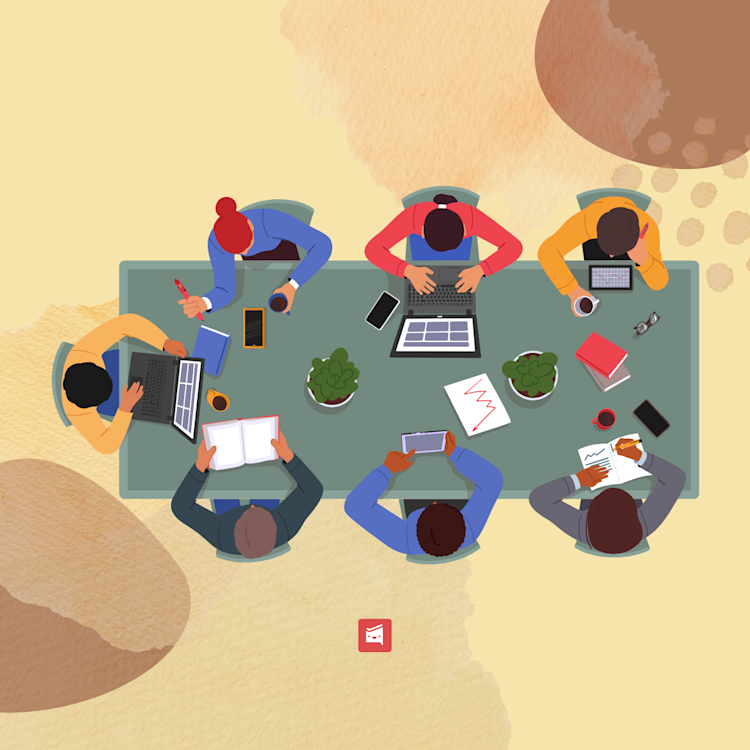
Ever feel like you’re running a daycare for adults? You’re not alone. Managers today are stuck in a paradox: teams need alignment, but micromanaging feels like herding cats with spreadsheets. What if you could keep everyone on the same page without turning into the office hall monitor?
How to Stay Organized Across Every Area of Life

Life isn’t just busy—it’s a whirlwind of responsibilities, dreams, and unexpected detours. The difference between feeling overwhelmed and feeling in control often comes down to one thing: organization. But here’s the twist—it’s not about rigid schedules or endless to-do lists. True organization is about creating systems that work with your life, not against it. It’s about shifting your perspective from chaos to clarity, from reaction to intention. If you’ve ever felt like you’re drowning in tasks, juggling too many roles, or constantly playing catch-up, this guide is your lifeline. Let’s transform the way you approach organization—across work, home, health, and beyond.
The Productivity Power of Clear Priorities

The Productivity Power of Clear Priorities
The inbox is full. The calendar is a mosaic of back-to-back squares. The to-do list, curated with the best of intentions each morning, has become a testament to entropy—items crossed out in a frenzy, others left to yellow and fade. It is a scene of such universal familiarity that its very ubiquity has numbed us to its strangeness. We observe the frantic activity, the slight hunch of the shoulders, the flickering gaze between screens and sticky notes, and we recognize it as productivity. But the nagging sense remains: this is not working. The fascination with “getting things done” often masks a deeper, unspoken truth. The problem is rarely a lack of time, energy, or even skill. The problem is a lack of clarity. The core of true productivity is not the speed at which you move, but the precision with which you choose your direction. It is the quiet, formidable power of clear priorities.