


Most people underestimate the power of their workspace. We assume productivity is about willpower or deadlines, but the truth is far more subtle. The environment we work in shapes our focus, energy, and even our creativity—often without us realizing it. A cluttered desk, poor lighting, or a noisy room can quietly drain motivation, while a thoughtfully designed space can amplify efficiency without extra effort. The fascination with workspace design isn’t just about aesthetics; it’s about understanding how our surroundings influence the way we think and work.
Ajarn Forum Latest Articles
How to Build a Career‑Focused Productivity Plan
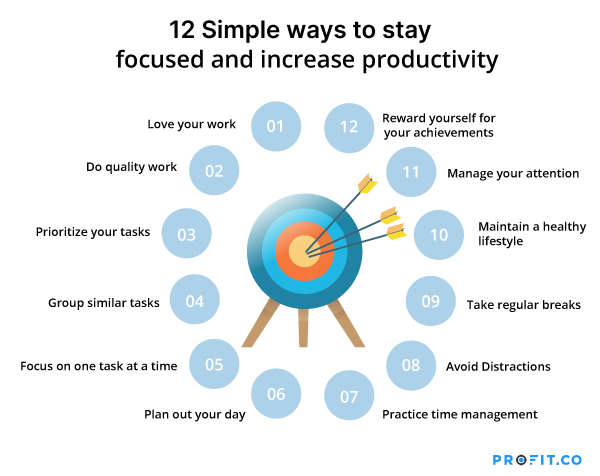
Imagine your career as a grand cathedral—each keystone, each arch, each stained-glass window meticulously placed to support a soaring vision. Without a blueprint, the structure risks collapse under the weight of distraction, procrastination, and misaligned priorities. A career-focused productivity plan isn’t just a schedule; it’s the architectural masterpiece that turns ambition into reality. It’s the difference between wandering in the fog of endless tasks and walking a path lit by purpose. Let’s build yours—stone by stone.
The Productivity Benefits of Digital Literacy


The Cartographer of the Invisible: Unlocking Productivity Through Digital Literacy
In an age where information flows like a restless river, productivity often feels less like a destination and more like a mirage—a shimmering promise that recedes the moment we reach for it. We arm ourselves with tools: gleaming laptops, synchronized calendars, and applications that promise to automate our lives. Yet, too often, we find ourselves paddling furiously against the current, drowning in notifications rather than navigating them. The missing element is not another tool, but a deeper, more fundamental skill: digital literacy. It is the cartography of this invisible world, the ability to read the terrain, anticipate its eddies, and chart a course from chaos to creation.
The Psychology Behind Better Decisions

The Cartography of the Unseen: Navigating Our Inner Landscape
Every decision is a map folded into a pocket, a route we trace through the mist of the future. We assume we are guided by the fixed stars of logic and data, but the truth is far stranger: we navigate not by the sky, but by the hidden geology of the mind. The psychology behind better decisions begins with the unsettling realization that our internal cartography is riddled with phantom landmarks—cognitive biases that warp distances, emotional quicksands that swallow reason, and the false peaks of overconfidence. To make a better choice is to first admit that the map is not the territory, and that the most treacherous terrain is the one between our ears.
The Elite Execution Framework You Need

The Architect’s Dilemma: Why Blueprints Fail
Every ambitious life is a skyscraper under construction. Yet, most people build with a crayon and a prayer. They have desires—wealth, influence, fulfillment—but they lack the load-bearing columns of a true framework. They chase tactics. A viral Instagram reel here, a networking event there. It’s like stacking bricks without rebar; the structure collapses the moment strong winds blow. This is the crisis of modern ambition: we have plenty of momentum, but zero engineering. What separates a cathedral from a rubble pile is not the height of the spire, but the depth of the foundation.
How to Keep Your Life Organized Without Effort

Ever feel like life is a game of Tetris, where blocks of chaos keep piling up no matter how hard you try to stack them neatly? You’re not alone. The secret isn’t about working harder—it’s about working smarter. What if you could keep your life organized without even trying? Let’s dive into the effortless art of staying on top of things, because who has time for stress when you can have serenity?
How to Stay Organized at Home Without Stress

Imagine your home as a grand orchestra. Each room, a section—kitchen strings, living room brass, bedroom percussion. Without a conductor, the symphony descends into cacophony: spoons clatter where they shouldn’t, laundry piles crescendo into mountains, and the remote control vanishes like a rogue violinist. But when harmony takes the stage, every object finds its place, and peace becomes the melody. Staying organized isn’t about rigid control; it’s about conducting your space with intention, turning clutter into clarity and chaos into calm. Here’s how to orchestrate your home into a stress-free sanctuary.
The Best Apps for Managing Your Time

The Paradox of the Productivity Tool
There is a peculiar, almost ironic fascination that grips us when we scroll through the app store in search of the perfect time management solution. It is the same quiet thrill one might feel when buying a new notebook—a clean, unblemished object that promises to be the vessel for a more organized, more efficient version of ourselves. We are not merely looking for a calendar; we are searching for a cure to the subtle and persistent anxiety of a scattered mind. This observation, that we often spend more time curating our tools than actually using them, hints at a deeper truth: the best app for managing time is not just a piece of software. It is a mirror reflecting our relationship with agency, discipline, and the finite nature of the hours we are given.
The Energy Management System Used by Top Performers

The Digital Backbone of High Performance
In an era where operational margins are razor-thin and sustainability mandates are no longer optional, the most successful organizations share a quiet, invisible advantage. They are not simply reacting to energy costs; they are dissecting them, optimizing them, and turning kilowatt-hours into a strategic asset. The difference between a company that merely survives an energy crisis and one that thrives lies in the sophistication of its Energy Management System (EMS). For top performers, this is not a utility function; it is the digital backbone of decision-making. They understand that without granular, real-time visibility, efficiency is merely guesswork.
The Deep Work Rituals of High Achievers

The Deep Work Rituals of High Achievers
We consume a constant stream of content about their morning green juices, their perfectly curated reading lists, and the precise minute they wake. It is easy to dismiss this fascination as mere voyeurism or aspirational shopping. Yet, the pull is real. We sense that these patterns are not random habits but a scaffolding for something profound. They hint at a relationship with work that feels alien to most—a state where effort ceases to be a grind and becomes a current. This is not about productivity hacks. It is about a deliberate architecture of attention. The rituals of high achievers are, at their core, a battle plan against the fragmentation of the modern mind.