


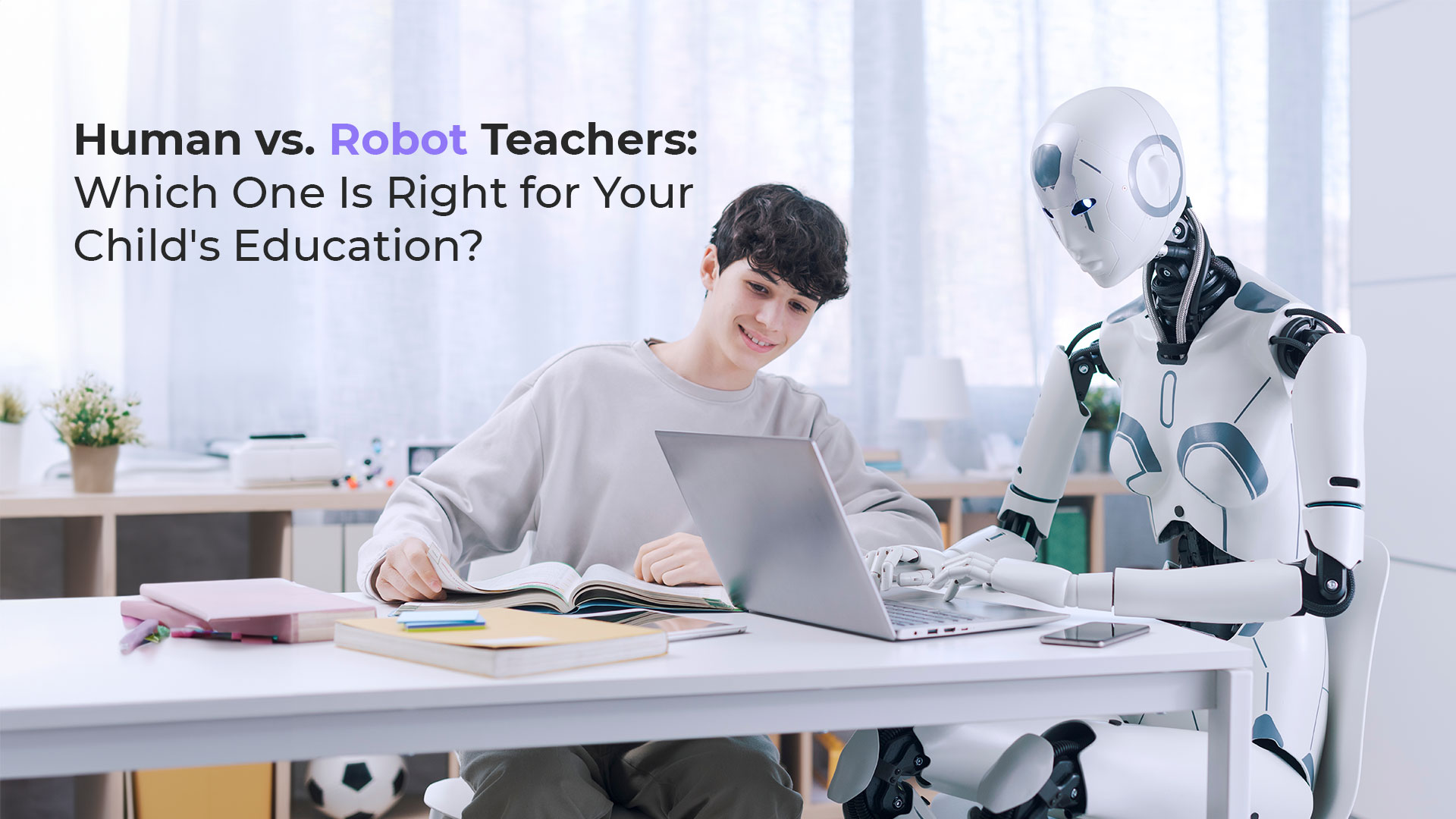
In the grand chessboard of education, where minds are the pieces and curiosity the moves, two players have emerged with strikingly different strategies. On one side stands the Generative AI Tutor, a silent virtuoso of data and algorithms, capable of adapting to the rhythm of a learner’s heartbeat. On the other, the Human Teacher, a living symphony of emotion, intuition, and lived experience, whose lessons resonate far beyond the confines of a textbook. This isn’t just a debate about tools—it’s a clash of philosophies, a dance between precision and passion, between the cold elegance of logic and the warm chaos of human connection. Welcome to the duel of power skills: where AI tutors and human teachers each wield a unique kind of magic.
The Algorithm as Architect: Precision, Patience, and the Power of Pattern
Imagine an architect who never sleeps, never tires, and never forgets. This is the Generative AI Tutor—a digital artisan sculpting personalized learning pathways with the relentless precision of a Swiss watch. Unlike human educators, constrained by time, emotion, and the limits of working memory, AI thrives on data-driven empathy. It doesn’t just respond to a student’s question; it anticipates it. It doesn’t just grade an answer—it dissects the cognitive journey that led to it.
At its core, AI tutoring is a cognitive mirror. It reflects not just what a learner knows, but how they think. Through natural language processing and machine learning, it decodes not only errors but the subtle patterns of misunderstanding—the misplaced comma that betrays a shaky grasp of syntax, the hesitation in a math problem that hints at conceptual gaps. This is the realm of micro-adaptation, where lessons are recalibrated in real time, like a river carving its own path through stone.
But precision alone does not a great educator make. The true genius of AI lies in its scalability of insight. A single AI tutor can simultaneously guide a thousand students, each receiving a bespoke curriculum calibrated to their neurodivergent strengths or learning disabilities. It doesn’t judge. It doesn’t fatigue. It simply iterates—constantly refining its approach based on feedback loops that would overwhelm even the most dedicated human mentor.
Yet, for all its brilliance, the AI tutor is a ghost in the machine—a presence without presence. It understands syntax but not soul. It processes data but not doubt. It delivers knowledge with surgical efficiency, yet it cannot whisper, “I believe in you,” when the going gets tough. That is the domain of the human teacher.
The Human Heartbeat: Intuition, Inspiration, and the Alchemy of Presence
Now picture a different kind of educator: not a machine, but a conductor of human potential. The human teacher doesn’t just teach facts—they teach feeling. They don’t just correct mistakes; they transform them into teachable moments. In their hands, education is not a transaction but a sacred dialogue, where curiosity is stoked, passions ignited, and failures reframed as stepping stones.
Human teachers possess an ineffable intuition—a sixth sense for when a student is merely confused versus truly disengaged. They read body language, tone, and the unspoken flicker of doubt in a student’s eyes. They adapt not just to what is said, but to what is unsaid. This is the realm of emergent pedagogy, where lessons evolve organically, shaped by the unpredictable chemistry of a classroom.
Consider the power of narrative pedagogy. A human teacher doesn’t just explain photosynthesis—they tell the story of a single leaf, how it bends toward the sun, how it wilts in drought, how it survives the winter. They connect science to life, math to music, history to the headlines of today. This is the art of contextual alchemy, turning abstract concepts into lived experience.
Moreover, human teachers are moral compasses. They model empathy, resilience, and ethical reasoning. They teach not just how to solve a quadratic equation, but how to argue with kindness, how to listen with intent, how to fail and rise again. In an age of digital distraction, the human teacher is a beacon of focus, a reminder that learning is not just about information absorption but about identity formation.
Yet, even the most passionate educator is bound by the tyranny of time. A single teacher cannot provide 24/7 feedback. They cannot instantly generate 50 different explanations for the same concept. They are, after all, human—subject to fatigue, bias, and the limits of their own knowledge.
The Synergy of Symbiosis: Where AI and Human Teachers Co-Create
The future of education isn’t a battle—it’s a symphbiosis. The most powerful learning ecosystems are not those that pit AI against humans, but those that allow them to dance in tandem. Imagine a classroom where the AI tutor acts as a tireless assistant, handling drills, quizzes, and adaptive exercises, while the human teacher focuses on what they do best: inspiration, mentorship, and the cultivation of wisdom.
In this hybrid model, AI becomes the scaffolding—the invisible structure that supports and elevates. It frees human teachers from administrative burdens, allowing them to invest more time in mentorship, creativity, and emotional intelligence. Meanwhile, the teacher becomes the curator of meaning, guiding students through the ethical dilemmas posed by AI, the limitations of data, and the importance of human connection in an increasingly automated world.
This symbiosis is already taking shape in advanced learning platforms. AI tutors handle the heavy lifting of personalized practice, while human teachers step in to facilitate debates, lead project-based learning, and provide the kind of mentorship that no algorithm could replicate. It’s a division of cognitive labor—where efficiency meets empathy, and scalability meets soul.
But symbiosis requires trust. Teachers must embrace AI as a partner, not a rival. Students must learn to navigate both the precision of algorithms and the ambiguity of human judgment. And society must redefine what it means to be educated—not just in terms of knowledge acquisition, but in terms of wisdom cultivation.

The Unseen Frontier: Ethics, Equity, and the Soul of Learning
Beyond the mechanics of teaching lies a deeper question: What kind of future do we want to build? If AI tutors become the primary educators, we risk creating a generation that excels at problem-solving but struggles with empathy. If human teachers remain the sole guides, we may leave behind those who need structured, data-driven support.
This is where the ethics of pedagogy come into play. We must ensure that AI tutors are transparent—no black boxes of decision-making. We must guard against algorithmic bias, ensuring that every student, regardless of background, receives equitable support. And we must preserve the irreplaceable value of human connection in education.
Equity, too, demands a hybrid approach. In under-resourced schools, AI tutors could provide a lifeline—offering personalized learning where human teachers are stretched thin. In affluent districts, they could free educators to focus on enrichment rather than remediation. The key is to ensure that technology serves as a bridge, not a divider.
Ultimately, the balance between AI tutors and human teachers isn’t just about tools—it’s about values. Do we want an education system that values efficiency above all? Or one that cherishes the messy, beautiful, unpredictable journey of human growth? The answer, of course, is both. The future belongs not to a single victor, but to a harmonious ecosystem—where the cold logic of machines meets the warm pulse of human hearts.
The Final Lesson: A Tapestry Woven with Both Threads
As the sun sets on the old debate of AI versus humans, a new dawn rises—one where education is not a zero-sum game, but a collaborative masterpiece. The Generative AI Tutor is the loom, weaving patterns of knowledge with unmatched precision. The human teacher is the artist, adding color, texture, and meaning to the fabric.
Together, they create something greater than the sum of their parts. They build not just learners, but thinkers. Not just students, but citizens. Not just minds, but souls.
So let the algorithms crunch the data. Let the teachers ignite the fire. The future of education isn’t a choice between two worlds—it’s a fusion of both, a symphony where every note, whether digital or human, contributes to the grand crescendo of human potential.
In this new era, the greatest skill we can teach isn’t just how to learn—but how to choose what to learn, how to feel what we learn, and how to become through what we learn. And that, dear reader, is a lesson no algorithm—and no human—can teach alone.
Leave a comment